
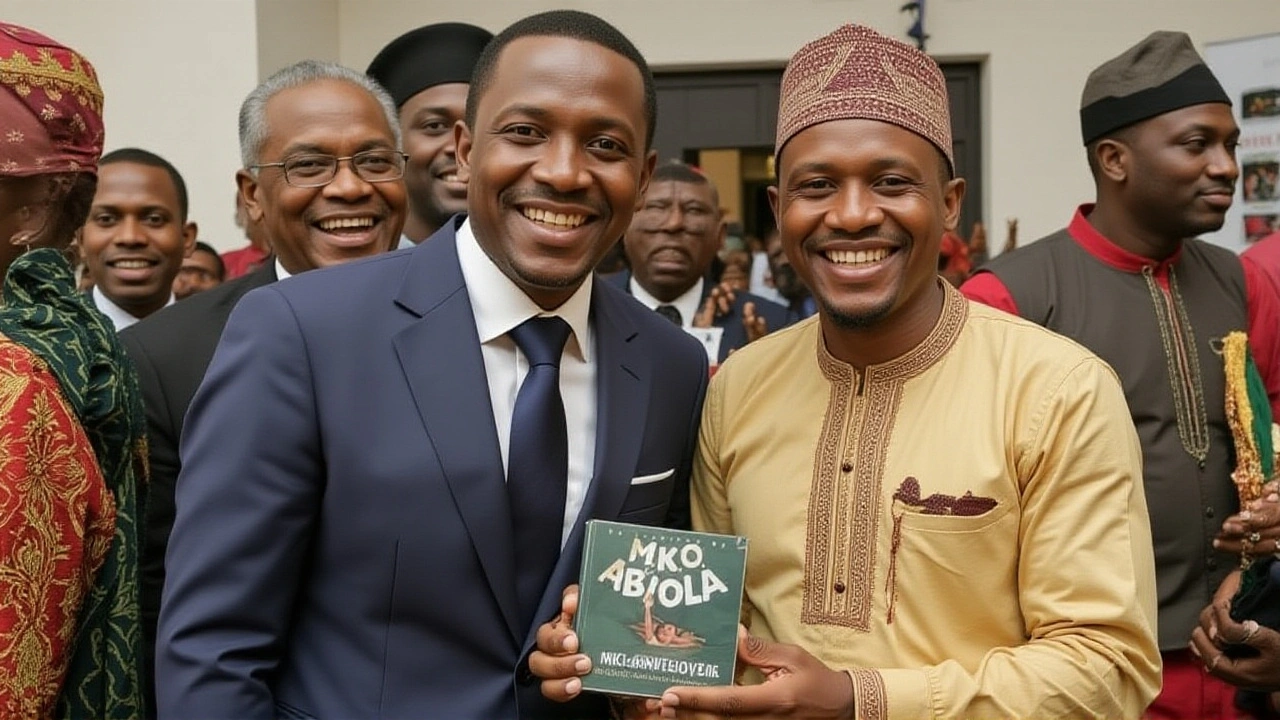
When Olamidotun Votu-Obada, a bestselling children’s author, speaker and podcast host, launched a new title in her Be Inspired by the Greatest, The BIG Series on Nigeria’s Independence AnniversaryNigeria, she paid tribute to legendary politician MKO Abiola.
Why the BIG Series matters now
The series, first unveiled in February 2024, was created to close a cultural knowledge gap that many African children face. Votu-Obada explained, “If you ask a seven‑year‑old in America about their heroes, you’ll hear George Washington or Abraham Lincoln. Yet many kids under twenty in Africa can’t name a single figure from their own history.” By turning figures like Abiola into accessible stories, the books aim to spark pride and curiosity among readers across the continent and diaspora.
The historical weight of MKO Abiola
Born in 1937, MKO Abiola was a wealthy businessman and philanthropist who entered politics, ultimately contesting the disputed 1993 presidential election. Though the results were annulled, his win is widely regarded as the most credible expression of the Nigerian people’s will since independence in 1960. His legacy, therefore, sits at the crossroads of democracy, entrepreneurship, and the fight for civil rights—precisely the kind of story Votu-Obada believes children need to hear.
Connecting past and present
Speaking at the launch, the author highlighted that Nigeria, often called “the giant of Africa,” has a wealth of untold stories. “Our independence was a turning point, but the narratives that follow—people like Abiola, Nnamdi Azikiwe, and Funmilayo Ransome‑Kuti—are what keep the spirit alive,” she said. The statement was echoed by reporter Florence Utor, who covered the event for local media on October 1, 2024.
How the books are built
Each title in the BIG Series follows a consistent format:
- Illustrated chapters that simplify complex political events.
- Sidebars featuring "Did you know?" facts that encourage deeper research.
- Discussion questions at the end of every book for classroom or family use.
Votu-Obada worked closely with historians from the University of Lagos and the African Studies Centre in Nairobi to ensure factual accuracy while keeping the language lively for readers aged six to twelve.
Reception and early impact
Within the first week of release, schools in Lagos and Abuja reported a surge in requests for the MKO Abiola volume. One teacher from Queen’s Academy noted, “My students were surprised to learn that a man who once owned a fleet of trucks could also become a symbol of democratic hope.” Online, the hashtag #BIGSeries is trending across Nigerian and Ghanaian Twitter feeds, with parents sharing photos of their children reading the books.
Looking ahead: A pan‑African vision
The author plans to roll out additional titles featuring figures from Kenya, South Africa, and the Sahel region by the end of 2025. "Our goal is a continent‑wide library that every child can point to and say, ‘I know who that is,’" Votu-Obada added. If successful, the initiative could inspire similar educational publishing projects in other post‑colonial societies seeking to reclaim their histories.
Key facts
- Event: Launch of BIG Series title on MKO Abiola – October 1, 2024.
- Author: Olamidotun Votu-Obada.
- Reporter: Florence Utor.
- Target audience: African children 6‑12 years old, both on‑continent and in diaspora.
- Future rollout: Additional titles on African leaders slated for 2025.
Frequently Asked Questions
Why focus on MKO Abiola specifically?
Abiola’s 1993 presidential win is seen as the most credible democratic expression since Nigeria’s 1960 independence. His story intertwines entrepreneurship, activism, and the struggle for a transparent electoral process, making him a compelling role model for young readers.
How are the books different from standard history texts?
Each volume is illustrated, uses simple narrative language, and includes interactive sidebars that invite kids to explore facts on their own—turning dense history into a story they can relate to and discuss with peers.
Who funded the publication of the BIG Series?
The initial print run was backed by a partnership between Votu‑Obada’s own publishing house, HeritageKids Press, and a grant from the African Cultural Preservation Fund, which supports projects that safeguard indigenous narratives.
What impact does the series hope to have on African diaspora children?
By providing relatable stories of African leaders, the series aims to strengthen cultural identity among diaspora youth, encouraging them to see themselves as part of a larger historical continuum rather than outsiders to their heritage.
When will the next titles in the series be released?
Votu‑Obada has scheduled the rollout of books on Kenyan leader Jomo Kenyatta and South African activist Winnie Mandela for the second half of 2025, aligning with the respective countries’ independence celebrations.
Comments (14)
Well, I guess the BIG Series is… ,but really, turning a complex political figure like MKO Abiola into a bedtime story? It sounds…, overly simplistic, and frankly, a bit naive - the kind of “let‑kids‑read‑history‑without‑context” gimmick that works only if you ignore the messy realities, you know? I mean, kids love pictures, sure, but they also need the raw, unfiltered truth, not a sugar‑coated version that glosses over corruption, oppression, and the painful aftermath of a busted election. So, kudos for the effort, but maybe don’t pretend it’s a complete education, okay?
The initiative to introduce African luminaries to young readers is undeniably commendable, yet one cannot overlook the potential dilution of historical nuance when narratives are compressed into child‑friendly formats. While the illustrations are vibrant and the sidebars provide intriguing tidbits, it remains essential that educators supplement these volumes with more comprehensive discussions. In short, the BIG Series serves as a valuable springboard, but it should not replace deeper scholarly engagement.
Kids need heroes from their own soil.
Honestly, this project feels like a breath of fresh air for our classrooms. When I see a child flipping through pages that spotlight Abiola’s courage, I imagine the spark of curiosity igniting. The blend of simple language with vivid art makes the heavy topics approachable, and the discussion questions at the end are a clever touch for teachers and parents alike. Keep feeding our youngsters these stories – they’ll grow into informed citizens, I’m sure of it.
Yo, this is sooo cool! Finally a book that talks about our own legends instead of just foreign ones. I love how they made Abiola’s story fun and easy – even my lil bro got hooked. Keep it up, Votu‑Obada, you’re doing awesome work for the next gen. #ProudAfrican
Let’s be real, the BIG Series is part of a larger agenda to rewrite history in a way that serves globalist narratives. By sanitizing Abiola’s struggle and presenting it as a neat, feel‑good tale, we’re being fed a version of the past that omits the covert foreign interventions and the shadowy power brokers who still pull the strings today. Remember, folks, history is never neutral – it’s a battlefield of competing interests.
Reading through the BIG Series volume on MKO Abiola, I felt a wave of pride mixed with a lingering sense of unfinished business. The book captures his rise from humble beginnings to becoming a symbol of democratic hope, which is essential for children to understand that greatness can emerge from any background. Each illustration is carefully colored, showing bustling Lagos streets and quiet family moments that ground his story in everyday life. The sidebars peppered throughout the pages ask “Did you know?” questions that encourage kids to dig deeper, like discovering that Abiola once owned a fleet of trucks that served as a backbone for his philanthropic ventures. Moreover, the discussion prompts at the end are not merely filler; they facilitate family dialogues that can bridge generational gaps. What impresses me most is the collaboration with historians from Lagos and Nairobi, ensuring factual accuracy while still keeping the language lively. This partnership signals a commitment to authenticity that many commercial children’s books lack. As a nation still grappling with the remnants of military rule, presenting Abiola’s peaceful resistance offers a template for non‑violent activism. The narrative does not shy away from the 1993 election annulment, instead framing it as a teachable moment about the fragility of democracy. Children are shown that even when the odds are stacked, perseverance can change the course of history. By highlighting Abiola’s charitable work, the book also instills the value of giving back to one’s community. It subtly reminds young readers that leadership involves service, not just power. The inclusion of interactive elements, such as blank spaces for kids to draw their own version of a “hero,” fosters creativity alongside learning. I appreciate that the series is not just a static story but a dynamic educational tool. Ultimately, this volume stands as a bridge between past and present, urging the next generation to keep the flame of democratic aspiration alive.
That’s a fantastic breakdown! I hadn’t noticed how the “Did you know?” sections also serve as mini‑research prompts. It really shows the thought put into making history interactive for kids.
Love the depth you went into! 😍 The part about turning challenges into lessons is so needed. 👍 Keep spreading these empowering stories!
I see where you’re coming from, but I think the series aims more at education than agenda‑pushing. Still, it’s good to stay critical.
yeah the book looks great but i think teachers need more resources to expand on it, otherwise kids only get the surface.
Interesting point. While simplicity helps, perhaps we shouldn’t dismiss the value of a well‑crafted narrative for early learners.
The extensive analysis underscores the series’ pedagogical merit while acknowledging its limitations.
Behold, a literary beacon rises from the ashes of forgotten tales, blazing a path for our youth to reclaim their heritage!