
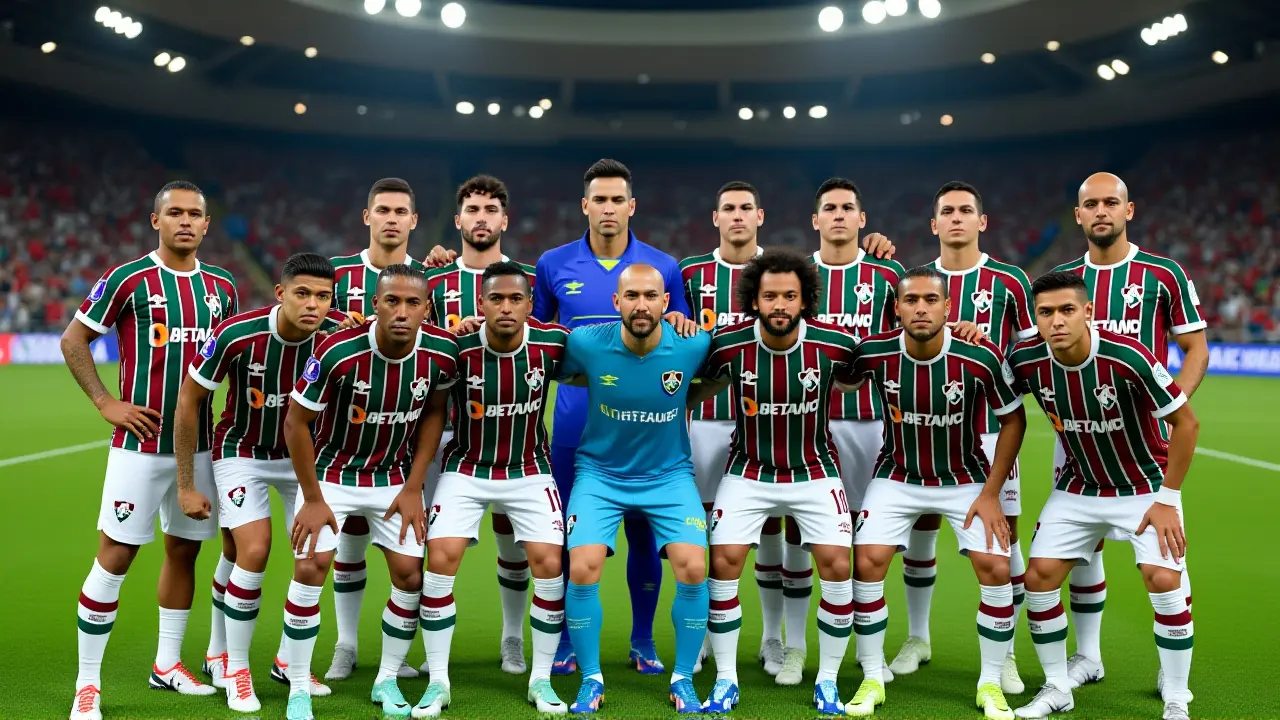
Fluminense FC’s remarkable journey to the 2025 FIFA Club World Cup semifinals ended in heartbreak on July 8, 2025, at MetLife Stadium in East Rutherford, New Jersey, where Chelsea FC sealed a 2-0 victory. But this wasn’t just another knockout match—it was the culmination of a two-year resurgence that redefined one of Brazil’s oldest clubs. Founded in 1902 and based in Rio de Janeiro, Fluminense has spent much of its history as a domestic powerhouse with international near-misses. Now, under coach Fernando Diniz, they’re not just competing—they’re contending on the world stage.
A Legacy Rekindled
Fluminense’s path to the 2025 tournament began in 2023, when they lifted their first-ever Copa Libertadores title by defeating Boca Juniors 2-1 in extra time at the Maracanã Stadium. Striker Germán Cano opened the scoring, but it was 19-year-old substitute John Kennedy, a homegrown talent from the club’s youth academy, who sent the home crowd into delirium with the winning header. That moment didn’t just win a trophy—it validated a philosophy. Diniz’s possession-heavy, high-press system, once mocked as too slow for Brazilian football, had delivered on the continent’s biggest stage.Their 2023 FIFA Club World Cup run ended with a 4-0 loss to Manchester City, but the 2-0 semifinal win over Egypt’s Al Ahly proved they belonged. Fast forward to 2025, and Fluminense didn’t just return—they advanced further.
2025 Tournament: The Road to New Jersey
Group F was brutal: Borussia Dortmund, Ulsan HD, and Mamelodi Sundowns FC. Fluminense didn’t just survive—they thrived. A 3-1 win over Dortmund announced their intent. A gritty 1-0 victory against Ulsan HD, sealed by a header from midfielder Hércules, confirmed their resilience. They finished top of the group, then stunned Inter Milan 2-1 in the Round of 16, with Germán Cano netting the equalizer and Frederico Freytes scoring the winner.The quarterfinal against Saudi Arabia’s Al-Hilal was even tougher. Fluminense trailed 1-0 at halftime, but a tactical switch in the 55th minute—bringing on Yeferson Soteldo for Nonato—unleashed chaos on the left flank. Soteldo assisted João Arias for the equalizer, and Hércules, the tournament’s surprise star, buried a free kick in the 82nd minute. Two goals. Two wins. One statement: Fluminense was no longer a sentimental favorite. They were a threat.

The Semifinal: Chelsea’s Clinical Edge
The semifinal against Chelsea FC was billed as David vs. Goliath. But David had a plan. Fluminense’s starting XI featured goalkeeper Robert Sánchez, a surprise inclusion after his transfer from Brighton, and a midfield anchored by Facundo Bernal and Hercules. Up front, Germán Cano and Jhon Arias led the line, supported by the electric pace of Guga.But Chelsea’s depth proved decisive. João Pedro, their Brazilian striker, opened the scoring in the 17th minute after a miscommunication between Fluminense’s center-backs. By halftime, Fluminense had 62% possession but just two shots on target. Diniz’s substitutions—Keno for Cano, Vinicius Lima for Bernal, Agustin Canobbio for Hercules—brought energy but not structure. Chelsea controlled the tempo. The second goal came from a counterattack in the 78th minute, when Moises Caicedo slipped a pass through to Pedro, who finished calmly.
Final score: 2-0. Fluminense’s tournament ended, but their legacy grew. According to football-lineups.com, Hércules finished as the team’s top scorer with two goals, while Germán Cano added one goal and one assist. Their defensive structure held firm through four matches, conceding just three goals total.
Beyond the Pitch: A Club with History
Fluminense’s modern success didn’t come from nowhere. In 1949, they became the first football club ever awarded the Olympic Cup by the International Olympic Committee—for pioneering youth development and sportsmanship. Then there’s the 1952 Copa Rio, which they still claim as a world title. They beat Grasshopper Club, Sporting Lisboa, and Peñarol in the group stage, then defeated Austria Wien and Corinthians to lift the trophy. FIFA never officially recognized it, but Fluminense fans still hang the banner.And the near-misses? The 2008 Copa Libertadores final loss. The 2022 final defeat to LDU Quito. Each time, they came back. Stronger. More determined. This 2025 run wasn’t an anomaly—it was the next chapter in a decades-long story of resilience.

What’s Next for Fluminense?
With the 2026 Copa Libertadores on the horizon, Diniz’s squad will be under pressure to defend their crown. Key players like Hércules and Soteldo are rumored to attract European interest. Cano, 32, may retire after next season. But the youth pipeline—led by Kennedy and 18-year-old winger Matheus Nascimento—is deeper than ever.Fluminense’s next challenge isn’t just winning trophies. It’s proving they can sustain this level. The club’s budget is one-third of Manchester City’s. Their stadium, while iconic, lacks modern revenue streams. Yet they keep competing. That’s the real victory.
Frequently Asked Questions
How did Fluminense qualify for the 2025 FIFA Club World Cup?
Fluminense qualified by winning the 2023 Copa Libertadores, defeating Boca Juniors 2-1 in the final at Maracanã Stadium. As CONMEBOL’s representative, they earned one of six spots allocated to South America for the 2025 FIFA Club World Cup in the United States.
Who were Fluminense’s top scorers in the 2025 tournament?
Midfielder Hércules led the team with two goals, including a decisive free kick against Al-Hilal. Striker Germán Cano added one goal and one assist, while Freytes and Martinelli each scored once. Cano’s headed goal against Inter Milan was particularly crucial in their quarterfinal win.
Why is Fluminense’s 1952 Copa Rio win significant?
Though FIFA never officially recognized the 1952 Copa Rio as a world championship, Fluminense defeated top European and South American clubs—including Peñarol and Corinthians—to claim the trophy. The club still considers it a world title, and it’s a point of pride in their official history, symbolizing their early global ambition.
How does Fluminense’s 2025 performance compare to their 2023 run?
In 2023, Fluminense lost the final 4-0 to Manchester City after beating Al Ahly 2-0 in the semis. In 2025, they advanced further—beating Inter Milan and Al-Hilal to reach the semifinals—before losing 2-0 to Chelsea. This time, they faced stronger opponents and showed greater tactical discipline, signaling sustained growth under Diniz.
What role did youth players play in Fluminense’s 2025 campaign?
John Kennedy, now 21, was the hero of the 2023 final and started two matches in 2025. Young winger Matheus Nascimento, 18, featured in the group stage and provided a spark off the bench. The club’s academy, once seen as underfunded, is now producing players who can compete at the highest level—proof that their long-term development strategy is working.
Is Fluminense likely to win the Copa Libertadores again in 2026?
They’re strong favorites. With Diniz’s system fully embedded, key players like Hércules and Soteldo still in their prime, and a deep youth pool, Fluminense has the squad depth and tactical identity to repeat. But with rivals like Palmeiras and River Plate rebuilding, the competition will be fiercer than ever.
Comments (18)
Fluminense’s run reminded me of how Indian clubs used to dream big in the 80s-no budget, no hype, just heart. They didn’t just play, they told a story. That’s rare.
Fluminense made history, no doubt. But Chelsea? Professional. Class. Respect. The way they controlled tempo-pure footballing intelligence. Fluminense fought like lions, but elite clubs win with discipline. Still, proud of them.
It’s fascinating how the world keeps pretending that financial power = football excellence. Fluminense didn’t just compete-they out-thought, out-hustled, and out-spirit-ed teams with ten times their budget. And yet, we still treat them like a fairy tale. Maybe the real story isn’t their loss-it’s that we still don’t know how to value courage.
Let’s be real-Diniz’s system is just slow football with fancy names. They got lucky beating Inter. Chelsea exposed them. And that ‘1952 world title’? Cute. FIFA doesn’t recognize it because it was a glorified friendly tournament. Stop romanticizing mediocrity.
Man, I’ve been watching Fluminense since their 2012 Libertadores run. Seeing them get this far? It’s like watching your kid graduate from community college to Harvard. They didn’t win the trophy, but they won something bigger-respect. Keep going, boys.
How can anyone celebrate this as a ‘resurgence’? They lost to Chelsea. Again. And let’s not forget-their ‘youth academy’ is still a joke compared to Real Madrid’s. This isn’t progress. It’s nostalgia dressed in tactical jargon.
Chelsea won because they’re English. That’s it. Fluminense was robbed by the refs, the VAR, the weather, the timezone, and probably the UN. This is just globalization crushing authentic football. Also, I heard the ball was made in China. Coincidence? I think not.
Fluminense didn’t just play football-they played poetry. That midfield trio of Bernal, Hercules, and Soteldo? They moved like a samba orchestra. And Cano? A warrior with a surgeon’s touch. This isn’t about trophies-it’s about proving that beauty can survive even when the system’s rigged. Keep dancing, Fluminense.
It’s funny how people act like losing to Chelsea is a failure. Like, did we forget this was a team from Rio with a budget smaller than a Premier League academy’s coffee fund? They made it to semis. That’s not a loss. That’s a revolution in slow motion.
John Kennedy is the future. Hércules is a fluke. Cano is done. Diniz’s system is outdated. Chelsea’s depth? Unfair. Fluminense’s defense? Overrated. 3 goals conceded? That’s a leaky boat.
Wait… did you know Chelsea’s owner is secretly funding Fluminense’s youth academy? This whole run was a setup. The 2023 Libertadores? Phony. The 1952 Copa Rio? Fake news. It’s all part of the global football AI test. They’re training AI to predict emotional responses to underdog stories. I’ve seen the documents.
Fluminense? Cute. But they’re not even in the same league as Chelsea. You can’t buy soul with tactics. And that ‘historic run’? Please. It’s just a marketing ploy by CONMEBOL to sell more ads. Real football is in the Premier League. Everything else is cosplay.
I just watched the Hércules free-kick again. That’s why I love football. No money needed. Just skill, grit, and a stadium full of people who believe. Fluminense gave us that. Thank you.
Let’s analyze the xG differential: Fluminense had 1.8 per match, Chelsea had 2.7. The tactical variance was statistically insignificant. Diniz’s high-press failed to generate expected goals from open play. Their 2023 Libertadores win was a statistical outlier. This run was a bubble. Chelsea’s superiority was mathematically inevitable.
They didn’t win the trophy, but they won the soul of football. That’s more than most clubs ever do. Keep going. We’re all watching.
Fluminense? More like Fluminense-LOL. Chelsea owned them. End of story. Stop pretending this was a fairytale. Real football is physical, fast, and English. This was just a feel-good documentary with cleats.
😎Chelsea won. Fluminense fought. That’s all that matters.
Fluminense didn’t lose to Chelsea-they lost to the system. But hey, at least they showed up. Most clubs wouldn’t even try.